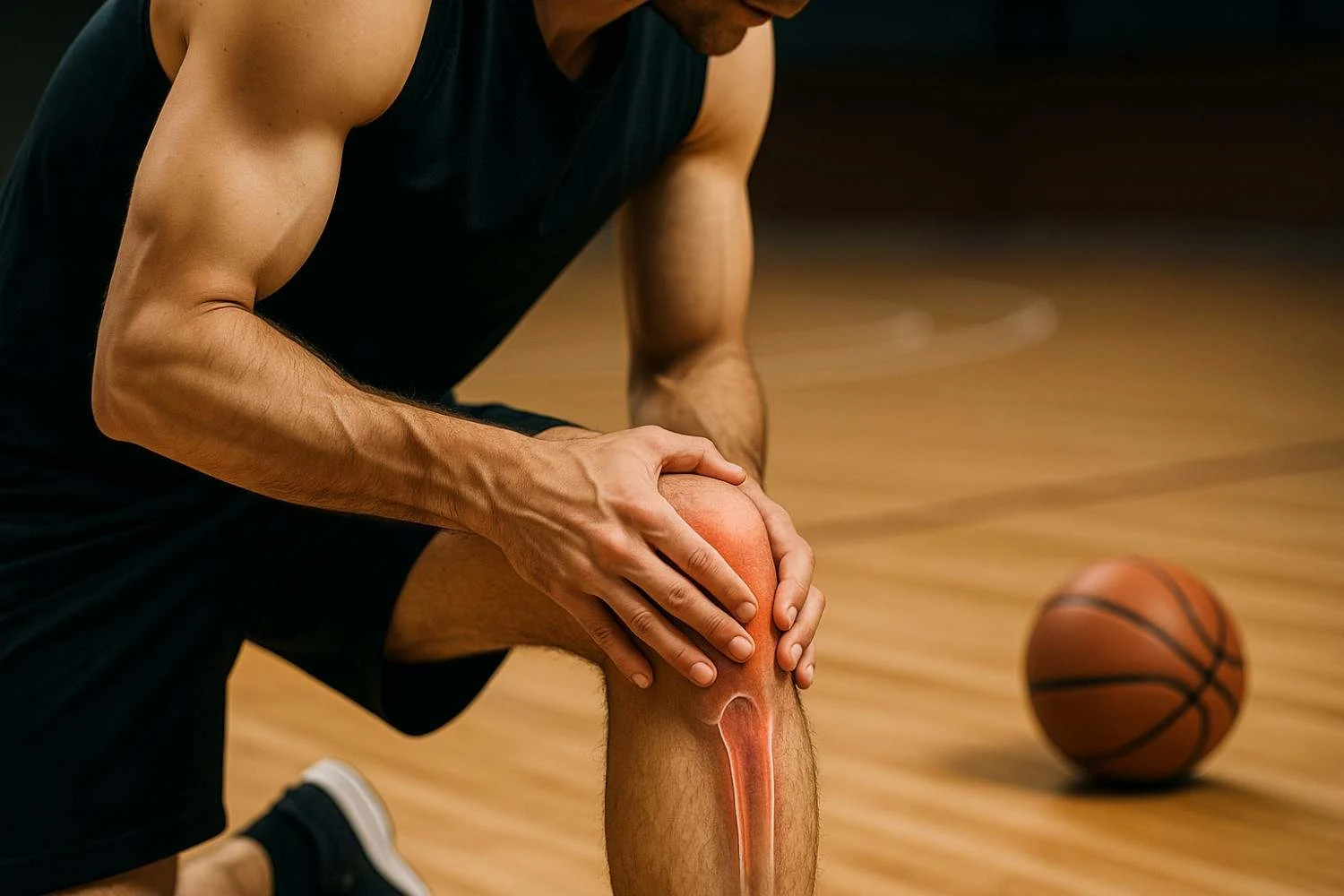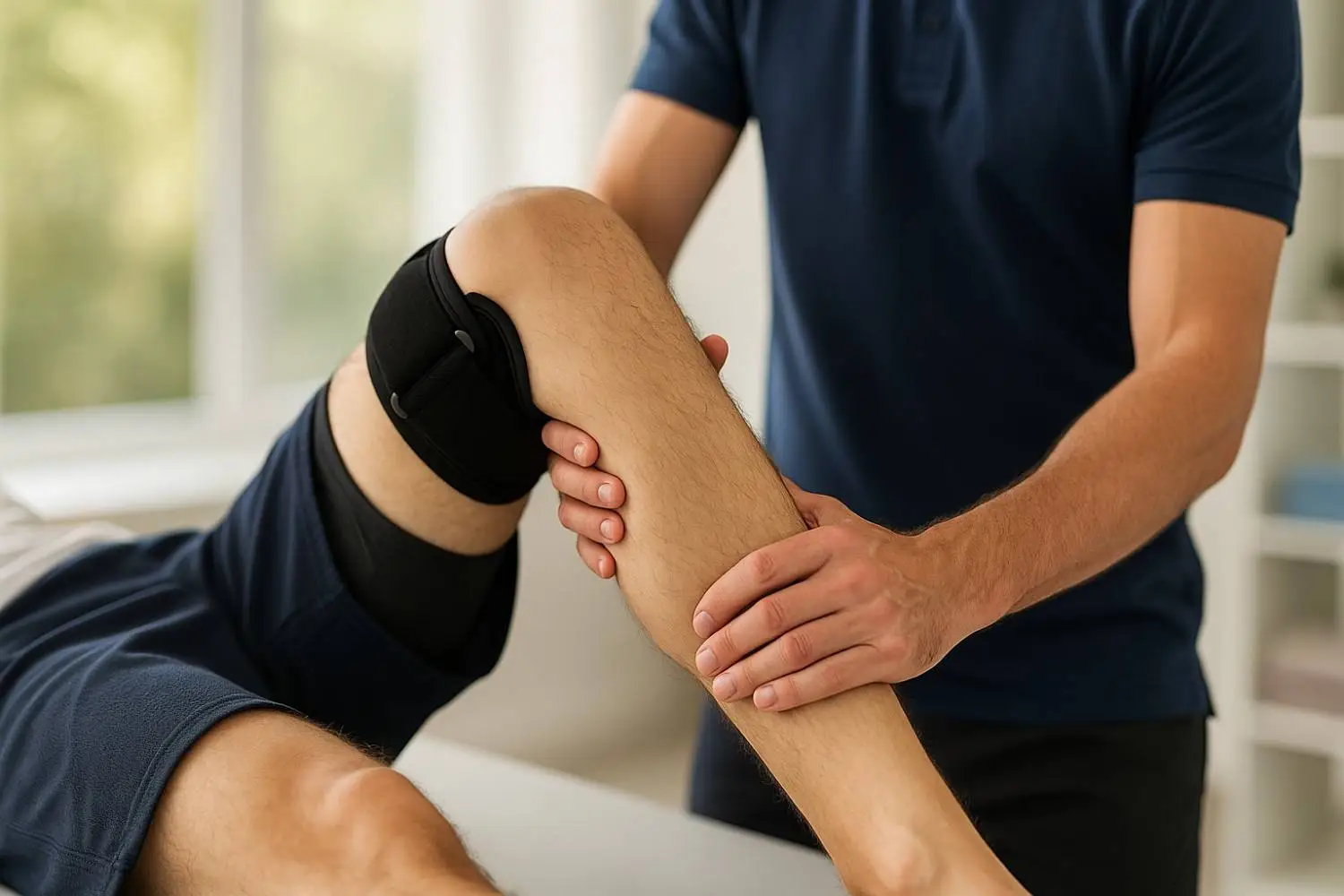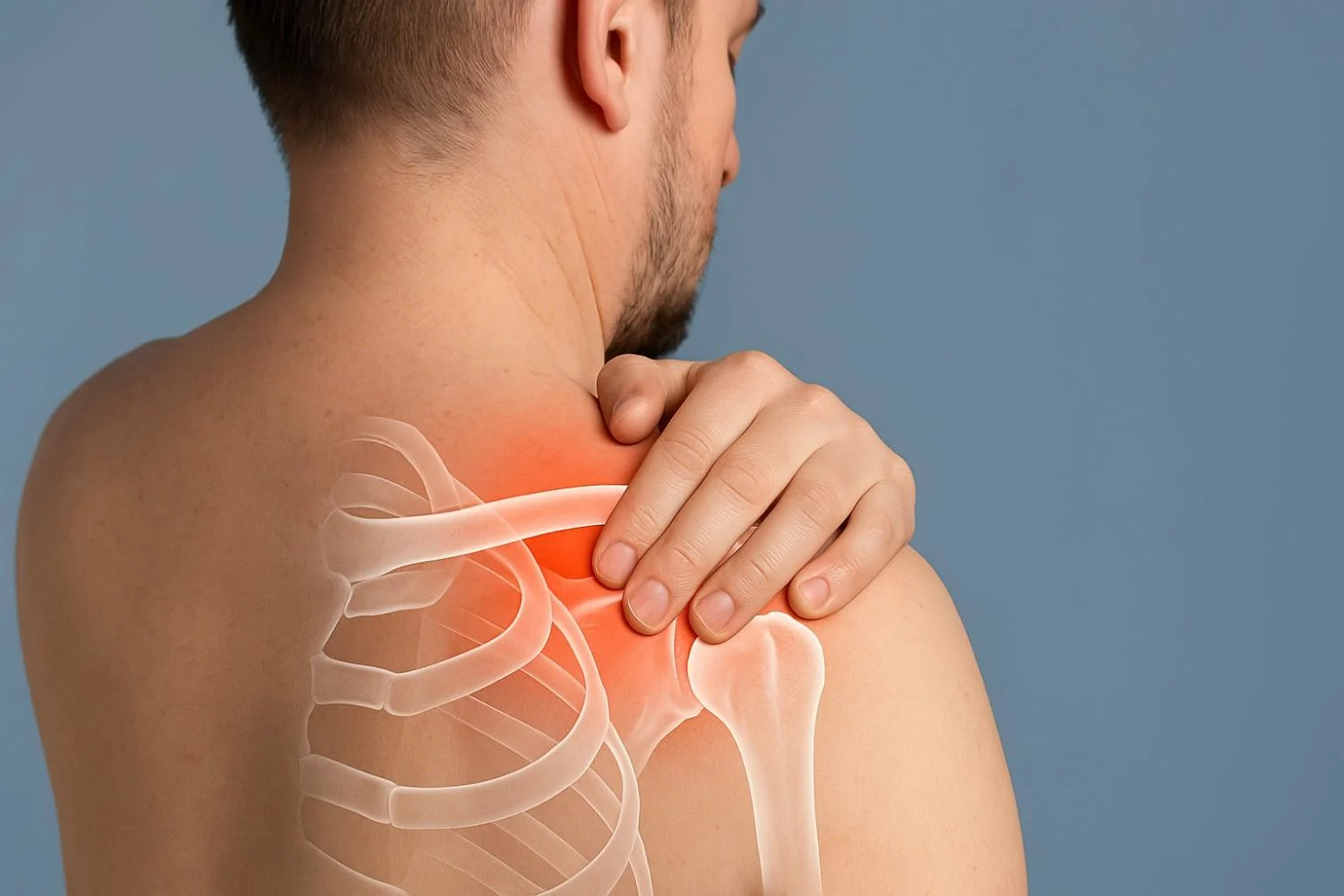
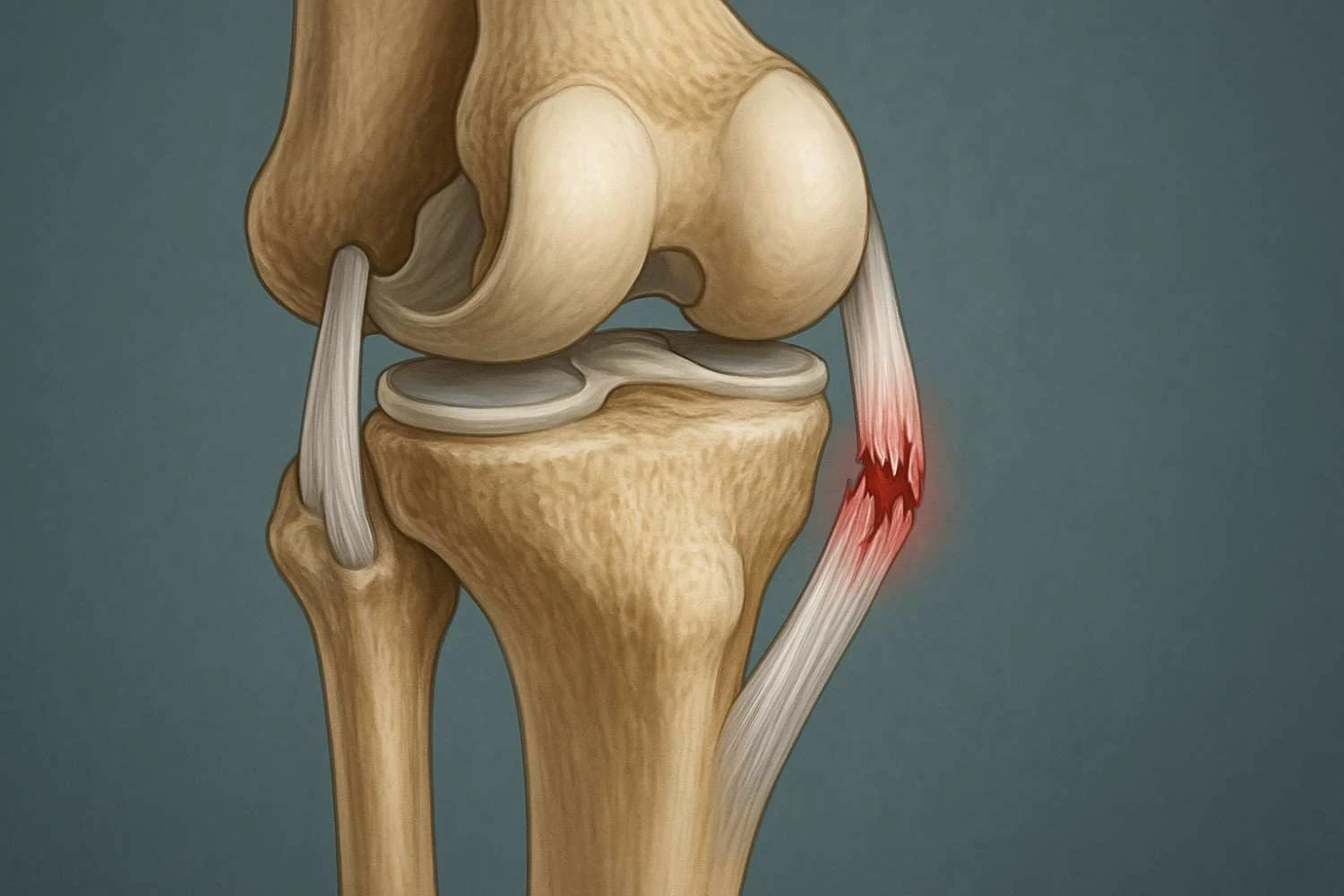
LCL injuries often show up in people who play cutting and pivoting sports, but they’re not limited to athletes. Anyone can twist a knee awkwardly, misstep off a curb, or get knocked from the side and end up with a lateral collateral ligament tear.
This guide walks you through what a Lateral Collateral Ligament Tear is, how to recognise it, what LCL Tear Treatment looks like (including physiotherapy and exercises), and when to worry.
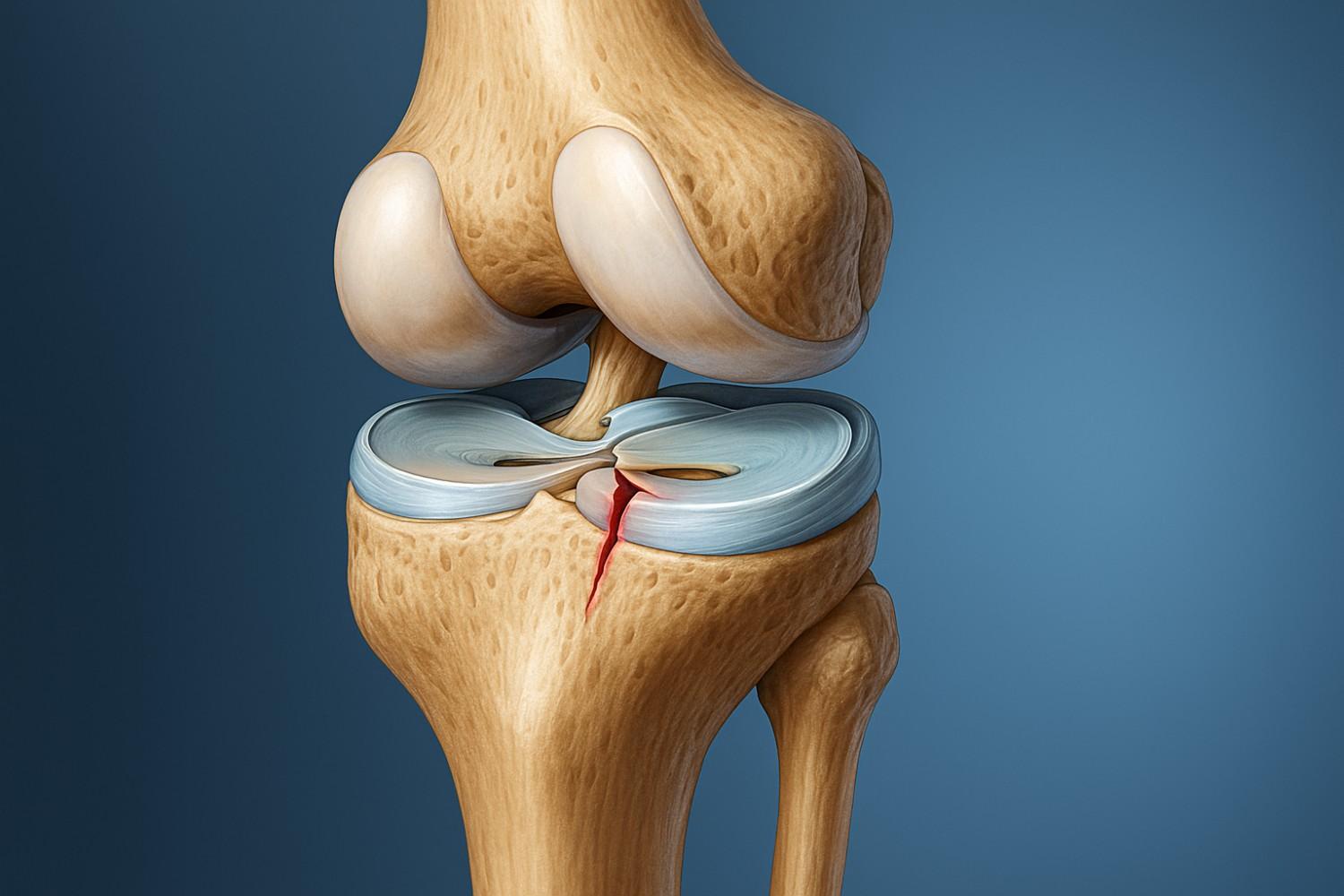
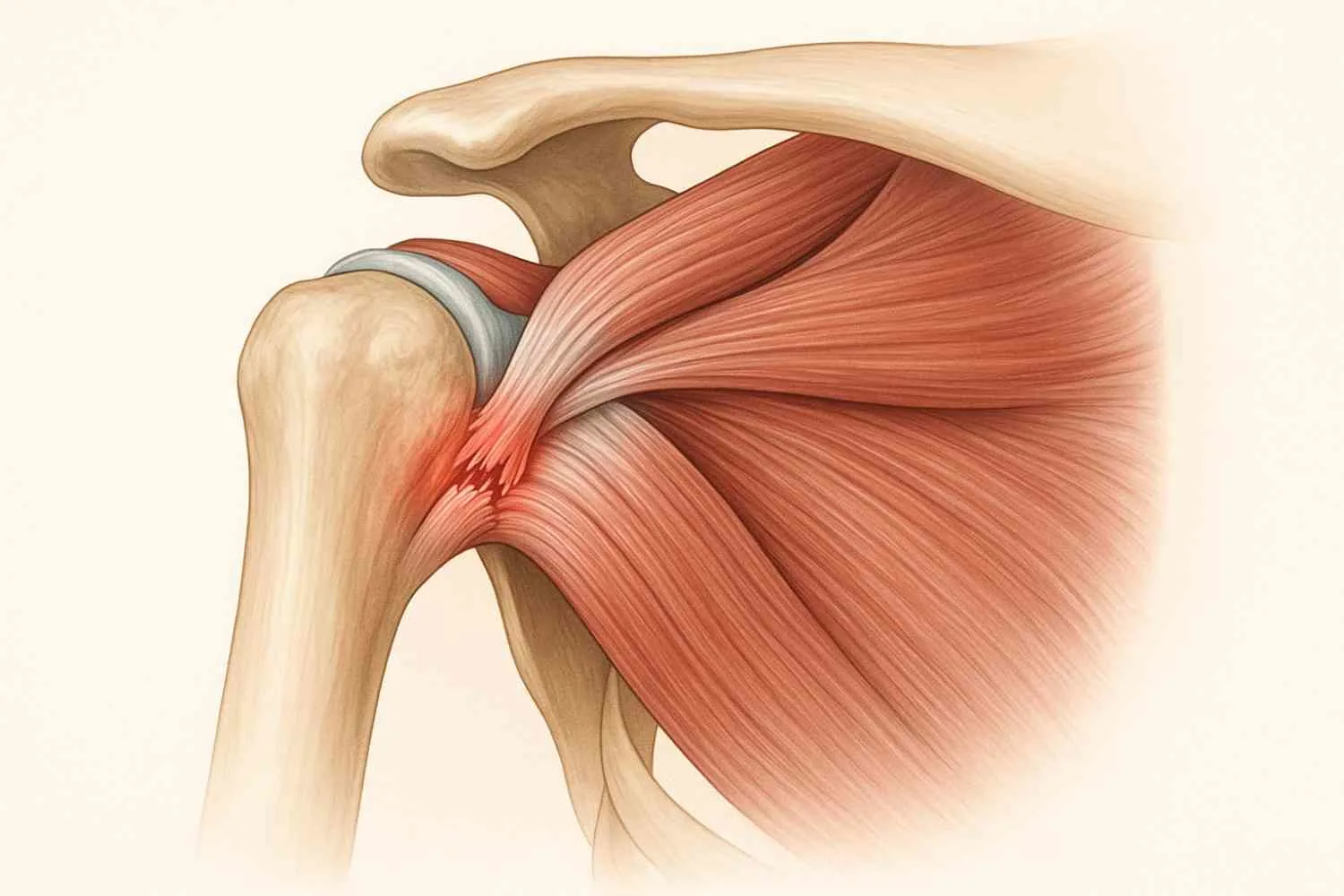
An LCL Tear is an injury to the lateral collateral ligament, the band of tissue on the outer side of your knee that connects your thigh bone (femur) to your shin bone (fibula). When this ligament is overstretched or torn, the outer knee becomes unstable, especially during side-to-side movements or sudden direction changes.
LCL Ligament Injury symptoms can range from mild discomfort to obvious instability. Here’s a quick scanner you can mentally run through after an outer-knee injury.
Common LCL Tear Symptoms:
Outer knee pain, especially along the outside joint line
Swelling around the outer side of the knee (may appear within a few hours)
Knee feels like it might “give way” during side-to-side moves
Pain while changing direction, cutting, or pivoting
Tenderness on the lateral (outer) side when you press with your fingers
Stiffness or difficulty fully bending or straightening the knee
Feeling of looseness when standing on one leg or walking on uneven ground
How symptoms vary by severity:
Mild (Grade 1):
Slight outer-knee pain
Minimal swelling or none at all
You can usually walk, but side movements feel uncomfortable
Moderate (Grade 2):
Noticeable pain and swelling
Tenderness when you press the outer ligament
Feeling of instability when changing direction or walking downstairs
Severe (Grade 3):
Significant pain at the moment of injury (sometimes followed by a “dull” feeling later)
Obvious knee instability, it may buckle sideways
Larger swelling and possible bruising
Walking without support may be very difficult
If your knee is buckling repeatedly or you’re scared to put weight on it, treat that as a red flag.
An LCL Ligament Injury usually comes from a force that pushes the knee inward or from sudden sideways stress.
Typical causes:
Sudden twisting of the knee during sports or quick turns
Direct blow to the inner side of the knee, pushing it outward
Contact sports like football, soccer, rugby, or basketball collisions
Poor landing biomechanics when jumping or stepping off a height
Sudden change in direction on uneven or slippery surfaces
Risk amplifiers:
Weak hip, glute, and lateral knee muscles
Poor control of knee alignment (knee collapsing inward while landing or squatting)
Prior ligament injuries, especially previous LCL or ACL tears
Inadequate warm-up before intense activity
Fatigue during training or matches
Wearing worn-out or inappropriate footwear for your sport or surface
For women and recreational athletes, things like weak hip stability, poor control in single-leg activities, or returning to sport too fast after pregnancy or weight changes can further increase the risk.
Only a doctor or physiotherapist can confirm an LCL Tear, but knowing the process helps you understand what’s happening.
Typical diagnosis steps:
History and symptom discussion
How the injury happened (twist, fall, tackle, sudden turn)
Where exactly the pain is (outer side vs deep behind kneecap)
Whether the knee feels unstable or gives way
Physical exam
Varus stress test: The clinician gently pushes the lower leg inward while stabilising the thigh to see how much the outer side of the knee opens and whether it causes pain.
They’ll also check other ligaments (ACL, PCL, MCL) to see if more than one is injured.
Imaging
MRI: Best test to confirm the severity of a Lateral Collateral Ligament Tear, see if it’s partial or complete, and check other structures like meniscus or cruciate ligaments.
X-ray: Doesn’t show the ligament itself but rules out fractures or avulsion (where a small piece of bone is pulled off by the ligament).
Quick self-check signs (not a diagnosis):
Pain is clearly on the outer side of the knee
Pain or instability increases when you move the lower leg inward (like someone pushing your ankle inward)
Side-to-side movements feel scary or unstable
Warning signals:
See a doctor quickly if you have any of these:
Sudden inability to put weight on the leg
Visible deformity or the knee looks “out of line”
Very large swelling within a few hours
Numbness, tingling, or cold foot (possible nerve/artery involvement)
Doctors often grade an LCL Tear based on how damaged the ligament is and how loose the joint feels.
|
Grade |
Severity |
LCL Condition |
Typical Recovery |
|
Grade 1 |
Mild |
Ligament stretched, microscopic fibres torn |
2–4 weeks (with rest + physio) |
|
Grade 2 |
Moderate |
Partial tear |
6–8+ weeks |
|
Grade 3 |
Severe |
Complete tear / no longer intact |
3–6 months, surgery often required |
These ranges are averages. Recovery depends on age, fitness, how early you start proper rehab, and whether other ligaments are involved.
If you suspect an LCL Ligament Injury, what you do in the first 24–72 hours makes a big difference.
What to do right after injury:
Stop activity immediately
Don’t “run it off” or try to be a hero. Continuing can worsen the tear.
Ice the outer knee
15–20 minutes at a time
Every 2–3 hours in the first 48 hours
Wrap ice in a cloth, never apply directly to the skin
Compression bandage
Elastic bandage or knee sleeve to limit swelling
Not so tight that your foot tingles or changes colour
Keep the leg elevated
The foot is higher than the heart level when resting
Helps reduce swelling and throbbing
Avoid weight bearing if painful
Use crutches if available
Don’t force yourself to walk normally if it hurts or feels unstable
Avoid heat, massage, and deep stretching early on
These can increase bleeding and swelling in the acute phase.
If pain is significant or you suspect a Grade 2–3 injury, see a doctor as soon as possible.
LCL Tear Treatment depends on the tear grade, your activity level, and whether other ligaments are damaged.
Most Grade 1 and many Grade 2 LCL tears are treated without surgery.
Rest and activity modification
Avoid painful movements, impact sports, and sideways loading in early weeks.
Ice and anti-inflammatory medication
Helps manage pain and swelling. Use only as advised by your doctor.
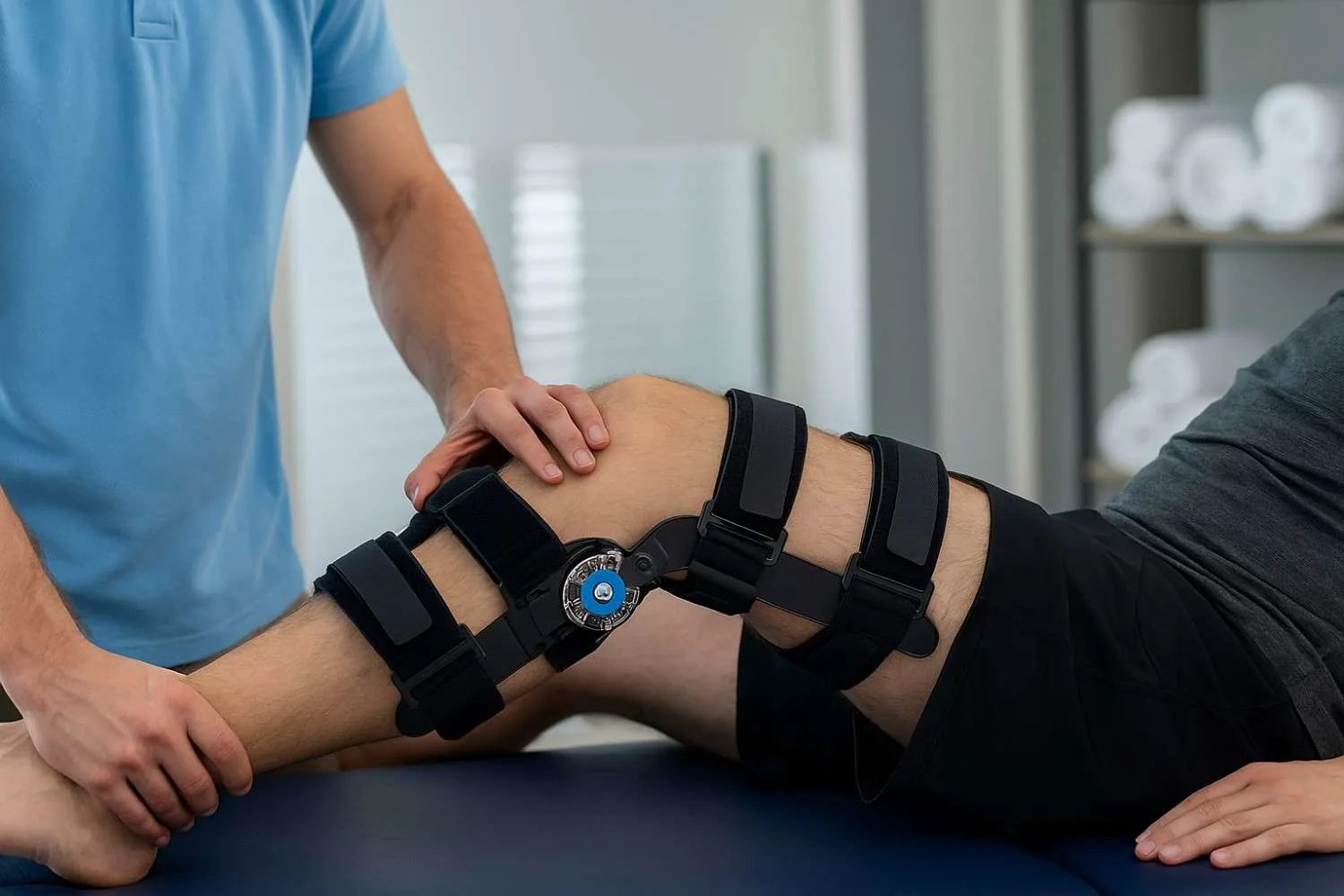
Knee brace
A hinged knee brace is often used to control sideways motion and protect the ligament while it heals.
Physiotherapy
This is the heart of recovery. A good rehab plan will:
Restore pain-free range of motion
Build strength in quadriceps, hamstrings, glutes, and calf
Improve balance and proprioception (joint position sense)
Gradually reintroduce running, cutting, and sport-specific drills
Surgery is more likely when:
You have a Grade 3 (complete) LCL tear
More than one ligament is injured (for example, LCL + ACL or PCL)
The ligament is pulled off the bone (avulsion)
The knee remains clearly unstable after a full trial of rehab
Common surgical approach:
LCL reconstruction using a graft
Surgeons use a tendon graft (from your body or a donor) to reconstruct the ligament.
This is followed by a carefully structured rehab program.
Even after surgery, physiotherapy is non-negotiable. The operation repairs the structure; rehab teaches your knee how to move and stay stable again.
Physiotherapy is essential for both non-surgical and post-surgical LCL Tear Treatment. Here’s how it usually progresses.
Note: These are examples, not a personalised plan. Always follow your physio’s guidance and pain limits.
Goal: Reduce stiffness without stressing the outer ligament too early.
Heel slides on bed
Assisted knee bends in sitting or lying
Gentle stationary cycling with low resistance (once cleared)
Goal: Support the knee from front and back.
Early stage (low load):
Static quad sets (tightening thigh with knee straight)
Straight leg raises
Bridges for hamstrings and glutes
Progressiv stage:
Mini-squats (keeping knees aligned over toes)
Step-ups and step-downs on a low step
Hamstring curls (with band or machine)
A Lateral Collateral Ligament Tear is heavily influenced by how your hip and pelvis control your leg.
Clamshells
Side-lying hip abduction
Monster walks with resistance band
Single-leg balance with small knee bend
These help the knee automatically handle uneven surfaces and sudden movements.
Single-leg stance on flat floor → then on a cushion
Single-leg stance with head turns or arm movements
Light perturbations from therapist or resistance band
For athletes and active people:
Jogging in straight line → then gentle curves
Side shuffles and lateral steps (when cleared)
Figure-of-8 and zig-zag running patterns
Cutting, deceleration, and jump-landing mechanics
You can imagine a simple graphic here for the blog:
Frame 1: Early phase – heel slides and quad sets
Frame 2: Mid phase – squats and step-ups
Frame 3: Late phase – lateral shuffles and agility ladder drills
On the live site, these could be short GIFs or simple line illustrations.
Recovery is not just about time; it’s about meeting functional milestones. But timelines help set expectations.
Typical recovery windows:
Grade 1 LCL Tear:
2–4 weeks for daily activities
Often back to light sports within 3–4 weeks if strength and stability tests are passed
Grade 2 LCL Tear:
6–8+ weeks for full daily activities
Light jogging around 4–6 weeks (if pain-free)
Return to cutting sports closer to 8–12 weeks depending on strength and confidence
Grade 3 LCL Tear (with surgery):
Protected weight bearing initially (brace + crutches)
Walking more comfortably by 6–8 weeks
Light jogging often at 3–4 months (if cleared)
Full athletic return around 5–6+ months, sometimes longer
Typical activity timeline (approximate):
Walking on flat ground:
Grade 1: Usually within a few days
Grade 2: 1–2 weeks
Grade 3 (post-surgery): 4–6 weeks, often with brace
Light sport (cycling, easy jogging):
Grade 1: 2–3 weeks
Grade 2: 4–6 weeks
Grade 3: 3–4 months
Full athletic return (cutting, pivoting, contact sport):
Grade 1: ~4 weeks
Grade 2: 8–12 weeks
Grade 3: 5–9+ months, depending on sport and combined injuries
Your physio and surgeon will check specific criteria like strength symmetry, hop tests, and stability before clearing you.
Don’t wait and hope it disappears if you notice:
Severe swelling within hours of the injury
Knee buckling repeatedly during normal walking
Inability to put weight on the leg or a feeling that the knee is “sliding out”
Pain that does not improve at all in 48 hours, even with rest and ice
Numbness, tingling, or colour change in the lower leg or foot
An orthopaedic doctor or sports physiotherapist is the right person to evaluate a suspected Lateral Collateral Ligament Tear.
Both are knee ligament injuries, but they affect different movements and have different typical causes.
|
Feature |
LCL Tear |
ACL Tear |
|
Location |
Outside (lateral) side of the knee |
Centre of knee, inside the joint |
|
Common cause |
Direct blow to inner knee, sideways force |
Twisting / pivoting, sudden deceleration, awkward landing |
|
Main stability loss |
Side-to-side (varus) instability |
Forward motion and rotation of the shin bone |
|
Pain area |
Outer side of knee |
Deep inside the knee, often with “pop” sound |
Both are serious if ignored, but ACL tears more often need surgery. LCL injuries can range from mild sprains to major multi-ligament injuries.
You can’t prevent every injury, but you can reduce your risk.
Strengthen lateral knee and hip muscles
Side-steps with band, single-leg squats, glute strengthening
Train proper landing mechanics
Land softly with knees aligned over toes, not collapsing inward
Work on balance and agility
Single-leg balance, change of direction drills, neuromuscular training
Use correct footwear
Shoes suitable for your sport and surface with good grip and support
Warm-up before sports
Dynamic stretches, light jogging, and activation for hips and core
Don’t ignore early soreness
Outer-knee niggles that keep returning deserve a physio check before they turn into a proper tear
Copyright 2026 | Omansh.org
Website designed and developed by PulsePlay Digital