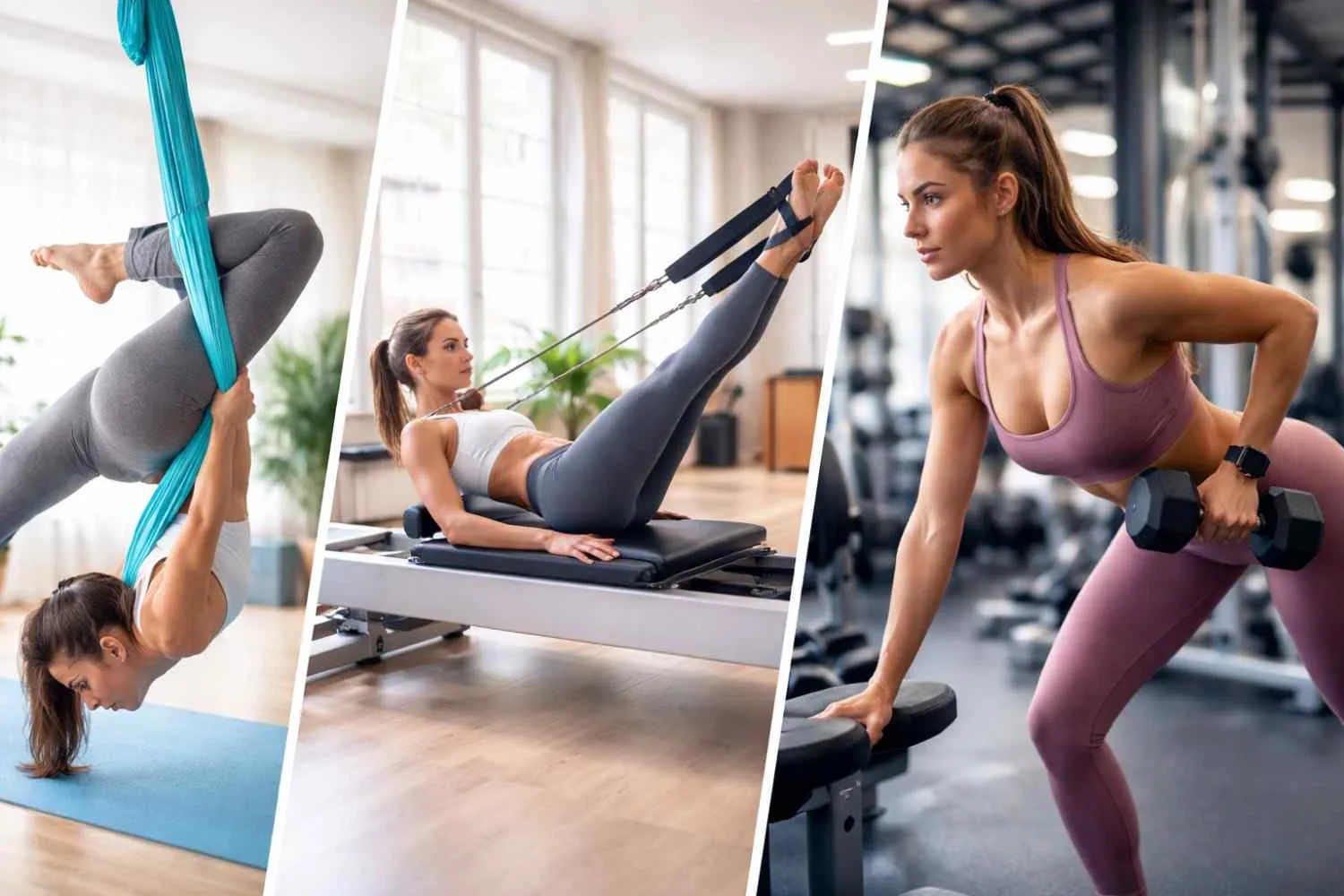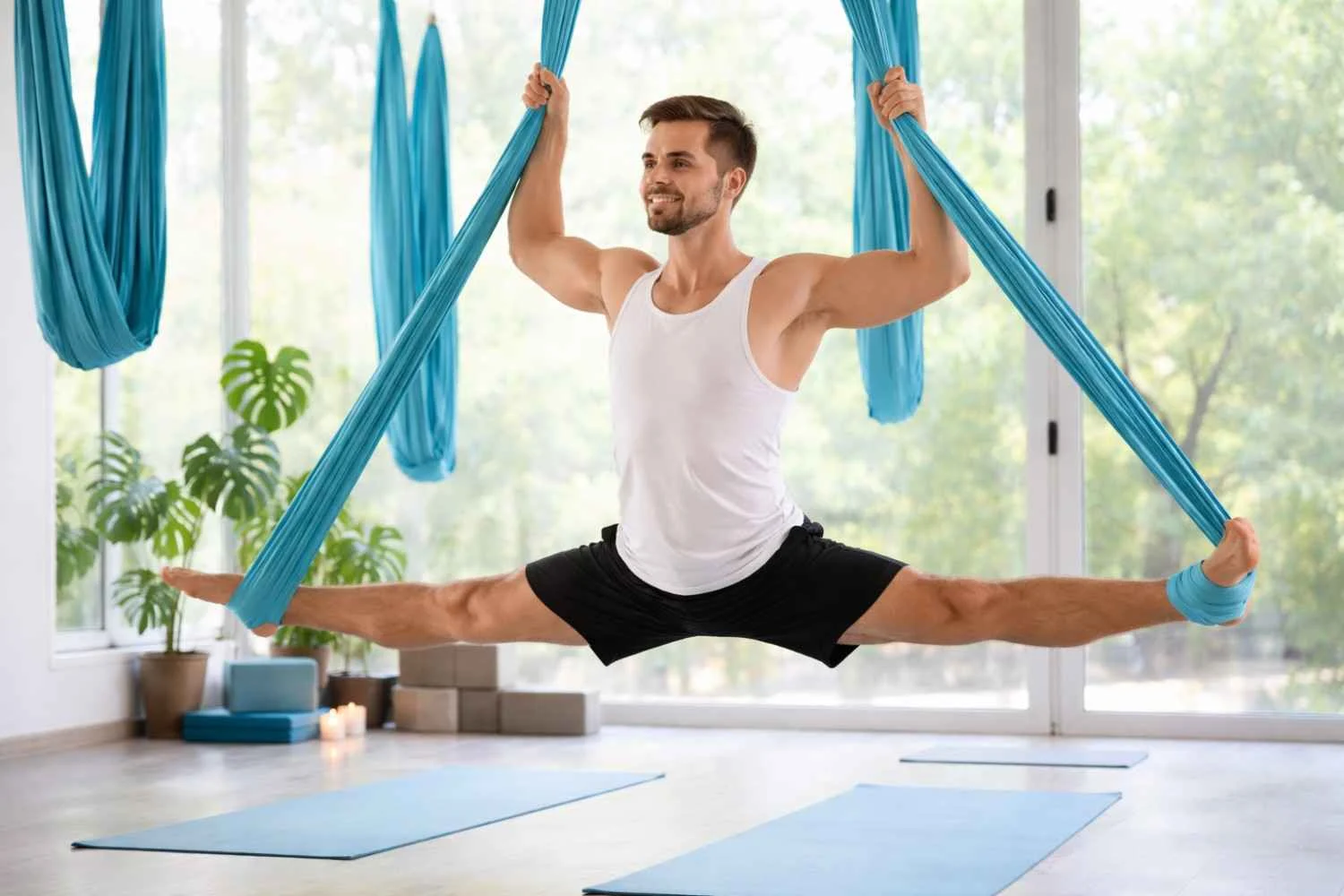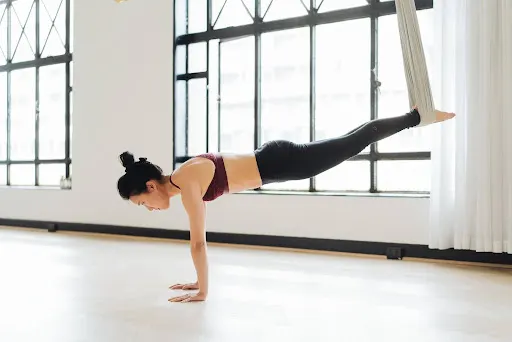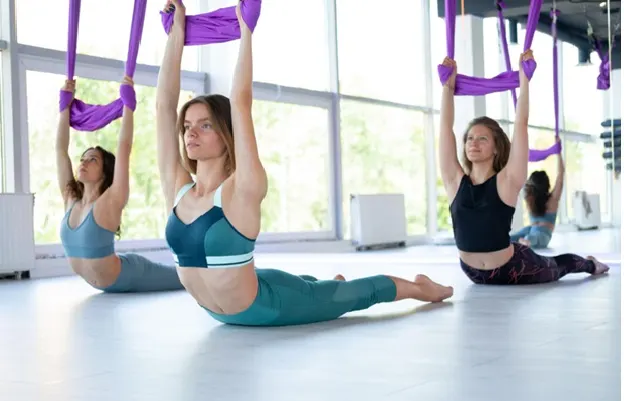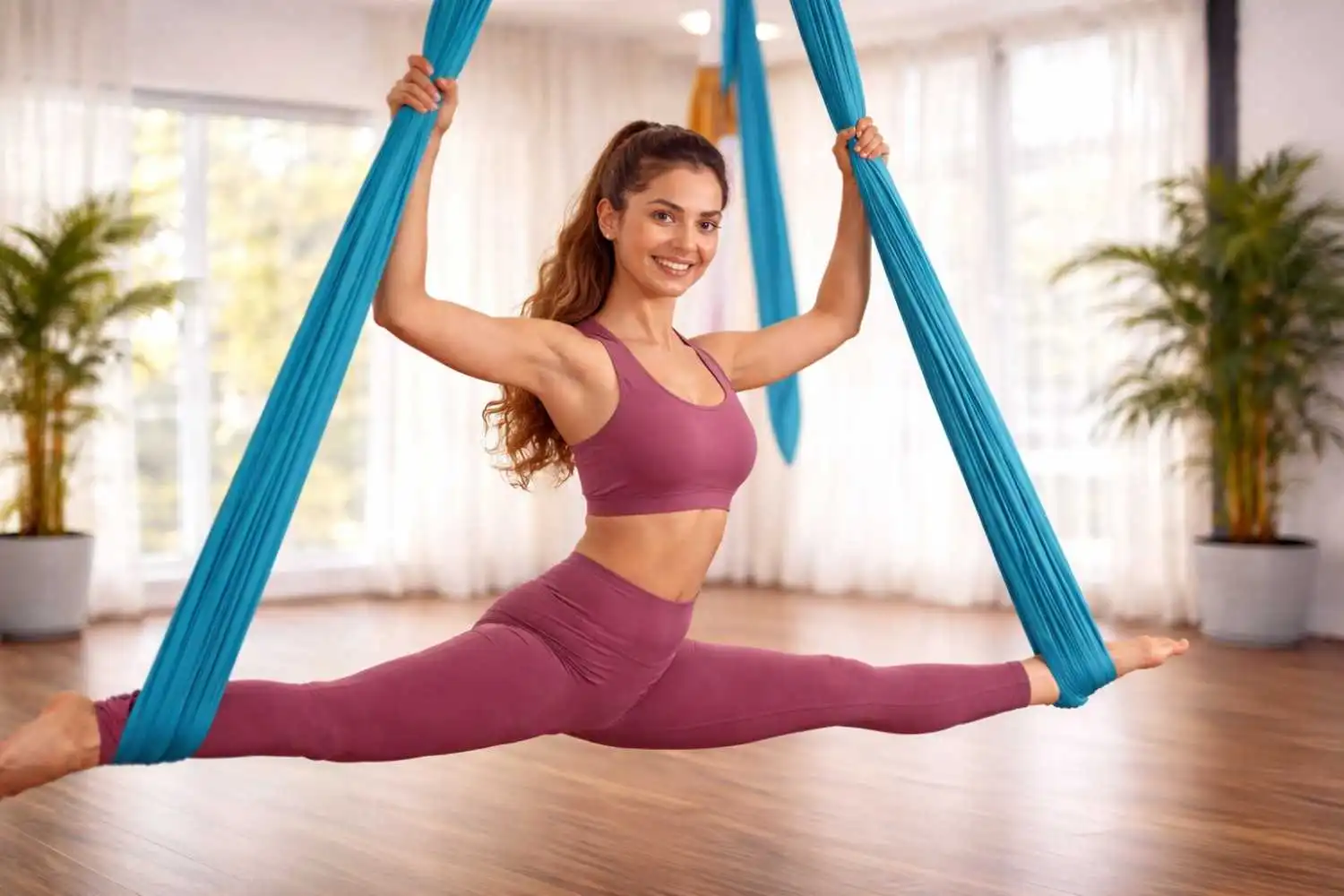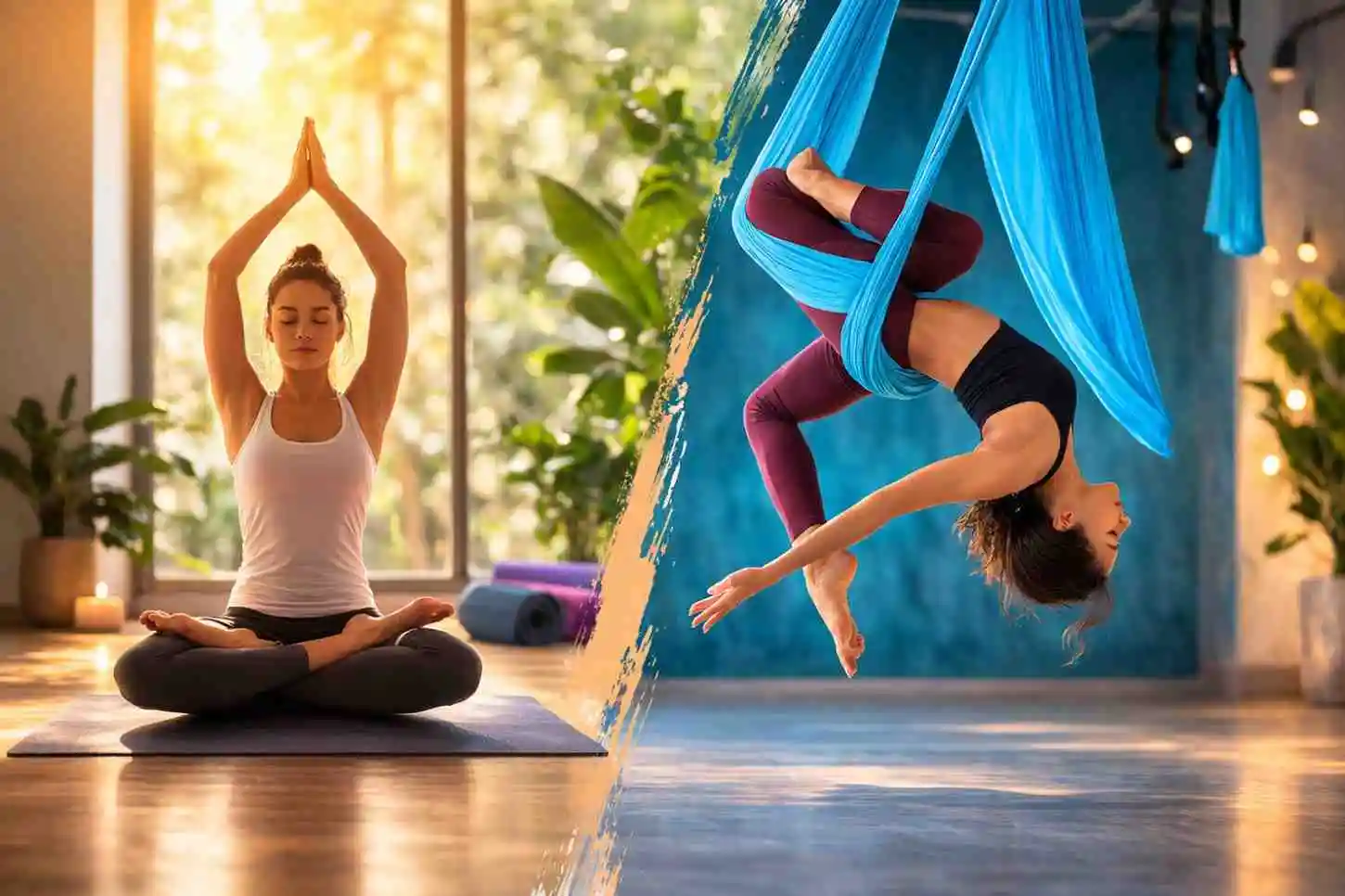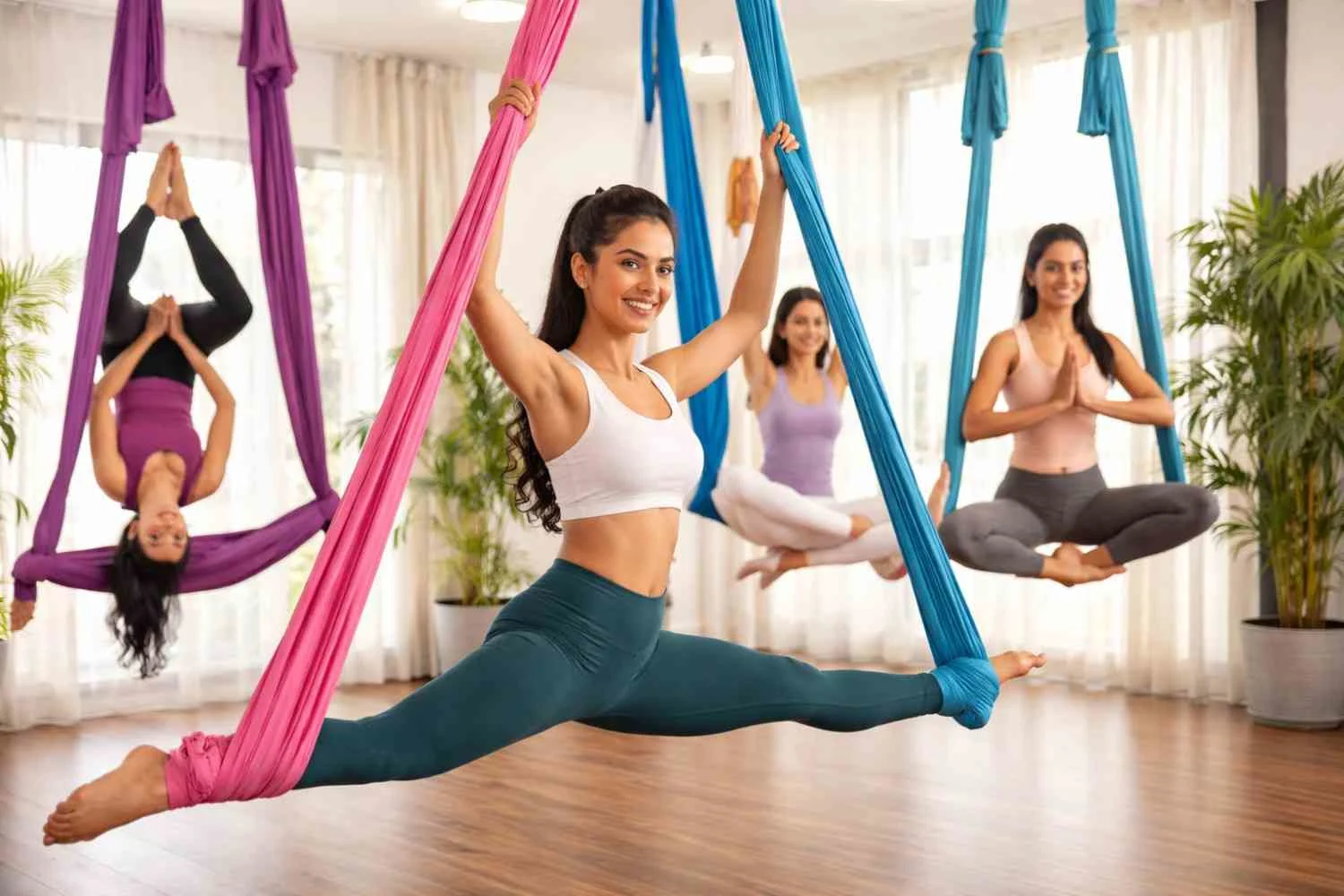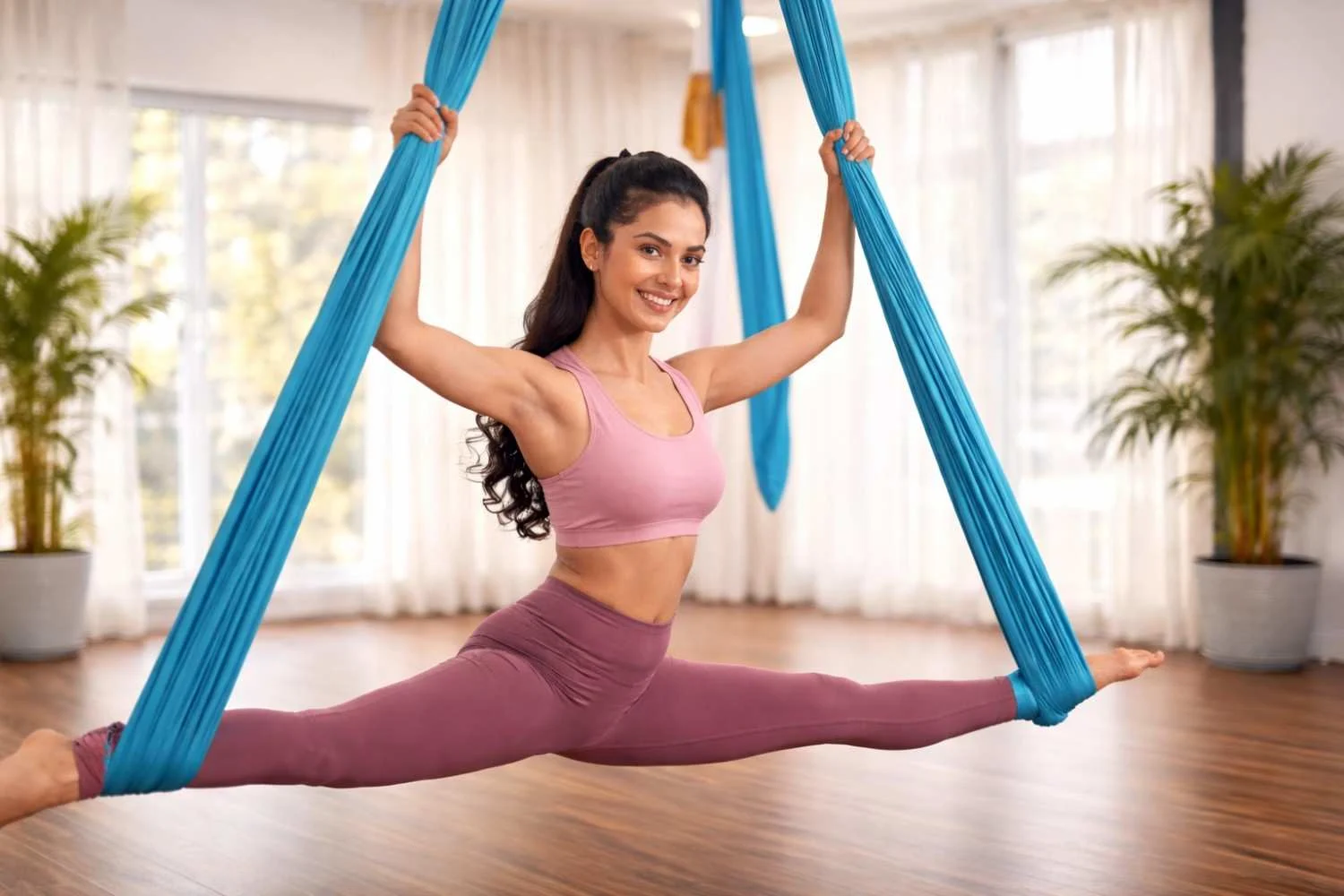
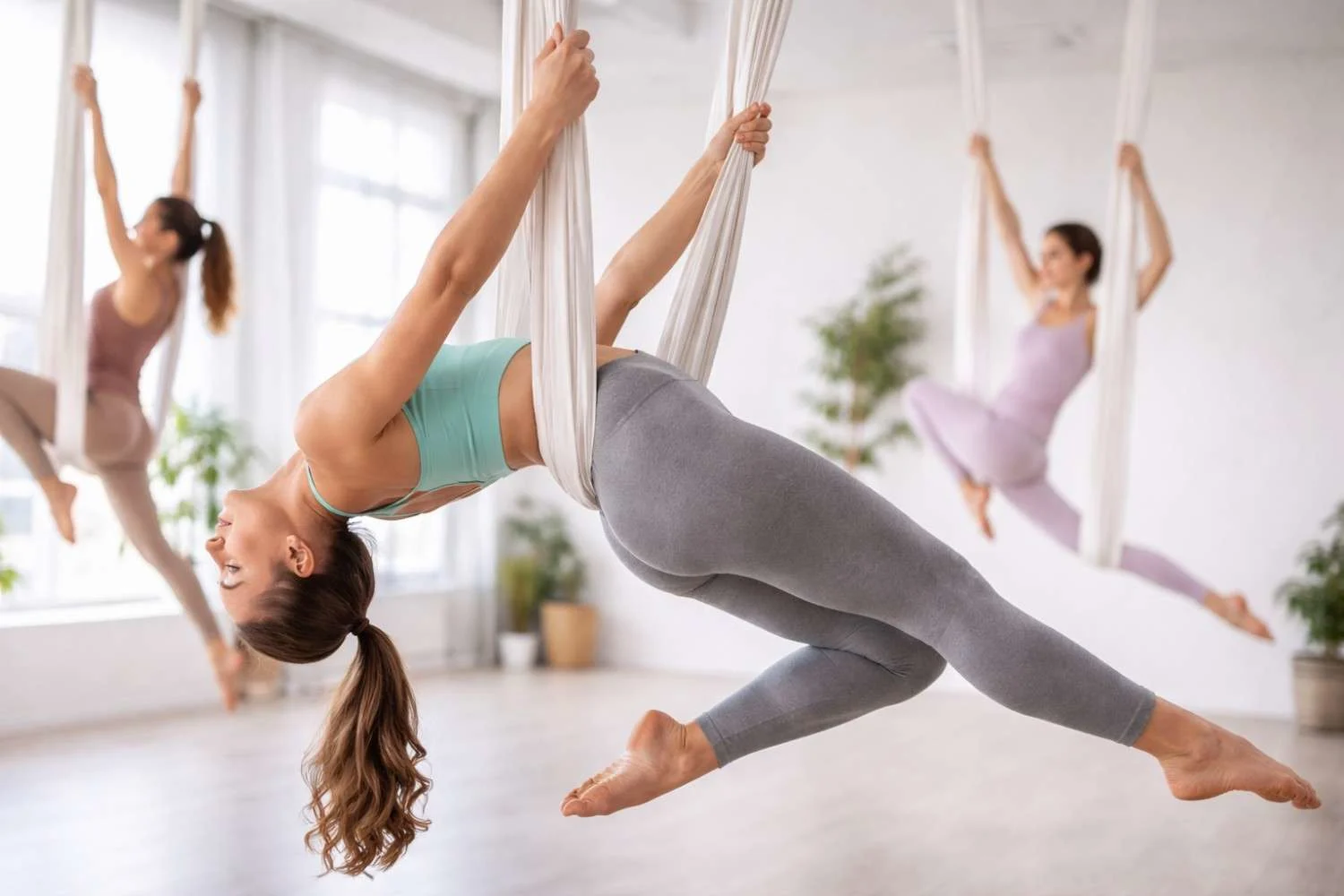
Aerial yoga is a modern and innovative form of yoga that involves performing traditional yoga poses while being supported by a hammock or fabric suspended from the ceiling. This aerial support enables deeper stretches, unique inversions, and enhanced mobility, all while minimizing pressure on the joints. Thanks to its adaptability, aerial yoga is suitable for complete beginners as well as seasoned yoga practitioners looking to diversify their practice.
Discover the freedom and flow of aerial yoga and elevate your wellness journey.
Literally speaking, aerial yoga is a combination of two elements: 'aerial', which implies being suspended in the air, and yoga, the ancient Indian practice focused on harmonising body, mind, and breath. Together, they form a unique discipline that blends traditional mat-based yoga with movements supported and enhanced by a suspended hammock.
This fusion creates a dynamic practice that brings together:
● Traditional yoga asanas (poses)
● Pilates-style core strengthening
● Aerial acrobatics-inspired movements
The hammock acts as both a support system and a prop. It allows the body to experience weightlessness during certain postures and inversions, helping to reduce spinal compression, encourage deeper stretches, and develop greater flexibility.
Aerial yoga is not just physically liberating—it has mental and emotional benefits too. The sense of floating in the air can be incredibly calming and meditative, allowing practitioners to release tension and build trust in their bodies and minds.
,
Curious about what it can do for you? Explore the benefits of aerial yoga.
Aerial yoga requires some specific equipment to ensure both the effectiveness and safety of the practice. While studios like Omansh provide all necessary gear during classes, understanding the tools involved helps build confidence, especially for beginners.
The centrepiece of aerial yoga is the hammock—a strong, high-density nylon or silk fabric that supports your body weight. It is designed to hold up to 300–600 kg, depending on the setup, and is soft to the touch while being incredibly durable.
Hammocks are generally rigged to the ceiling via anchors and can hang at hip height (for beginner-level poses) or higher for advanced routines. The fabric can be used in a looped form or as two separate slings, depending on the pose and training method.
These are industrial-grade metal clips and adjustable straps that connect the hammock to the ceiling rigging points. Carabiners allow for secure attachment, while daisy chains help adjust the hammock’s height for different body types and levels.
Studios install permanent ceiling mounts or use freestanding aerial yoga frames to suspend the hammocks safely. These are tested and engineered to support dynamic movements, spins, and full inversions.
Though most poses are done in the air, a yoga mat is used underneath for standing postures, warm-up stretches, or as a safety precaution.
● Always check the hammock and rigging for wear and tear before use.
● Wear fitted, comfortable clothing that covers underarms and knees to prevent fabric burns.
● Avoid using hand lotions or oils before class to maintain grip.
● Practise under the supervision of a trained instructor.
Want to learn more before starting? Check out our guide on aerial yoga for beginners.
Aerial yoga is widely accessible and can be practised by individuals across a range of fitness levels, body types, and yoga backgrounds. It’s ideal for:
● Beginners: The hammock provides support, making it easier to hold challenging poses and build body awareness.
● Intermediate and Advanced Yogis: Aerial yoga deepens your existing practice through creative movement, inversions, and enhanced alignment.
● People with Joint or Back Pain: The decompression effect from hanging upside down or semi-suspended poses relieves tension in the spine and joints.
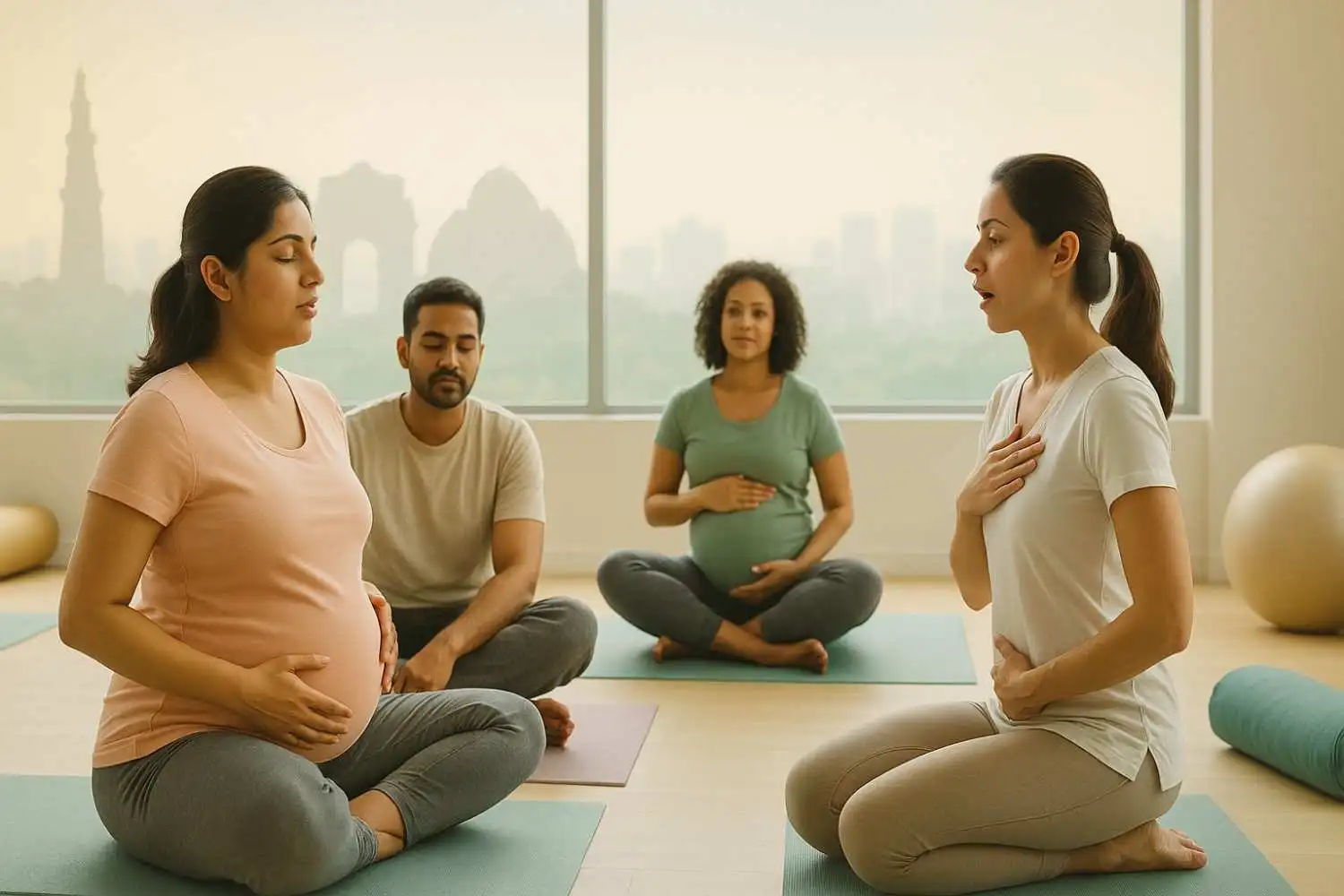
● Pregnant Women (With Modifications): Under medical guidance and trained supervision, gentle aerial yoga can improve circulation and posture during pregnancy.
● Seniors or Low-Impact Seekers: The hammock allows for weightless movements, making it joint-friendly and low-impact for ageing bodies.
While aerial yoga is generally safe, some individuals should take extra precautions or seek medical advice before beginning:
● People with vertigo, glaucoma, or high blood pressure
● Individuals recovering from recent surgeries or injuries
● Those with spinal instability or disc herniation
● Pregnant women in their third trimester without prior aerial yoga experience
Always consult a healthcare professional if you have a pre-existing condition, and make sure your instructor is aware of any limitations.
For an in-depth look at safety protocols, read: Is aerial yoga safe
Copyright 2026 | Omansh.org
Website designed and developed by PulsePlay Digital