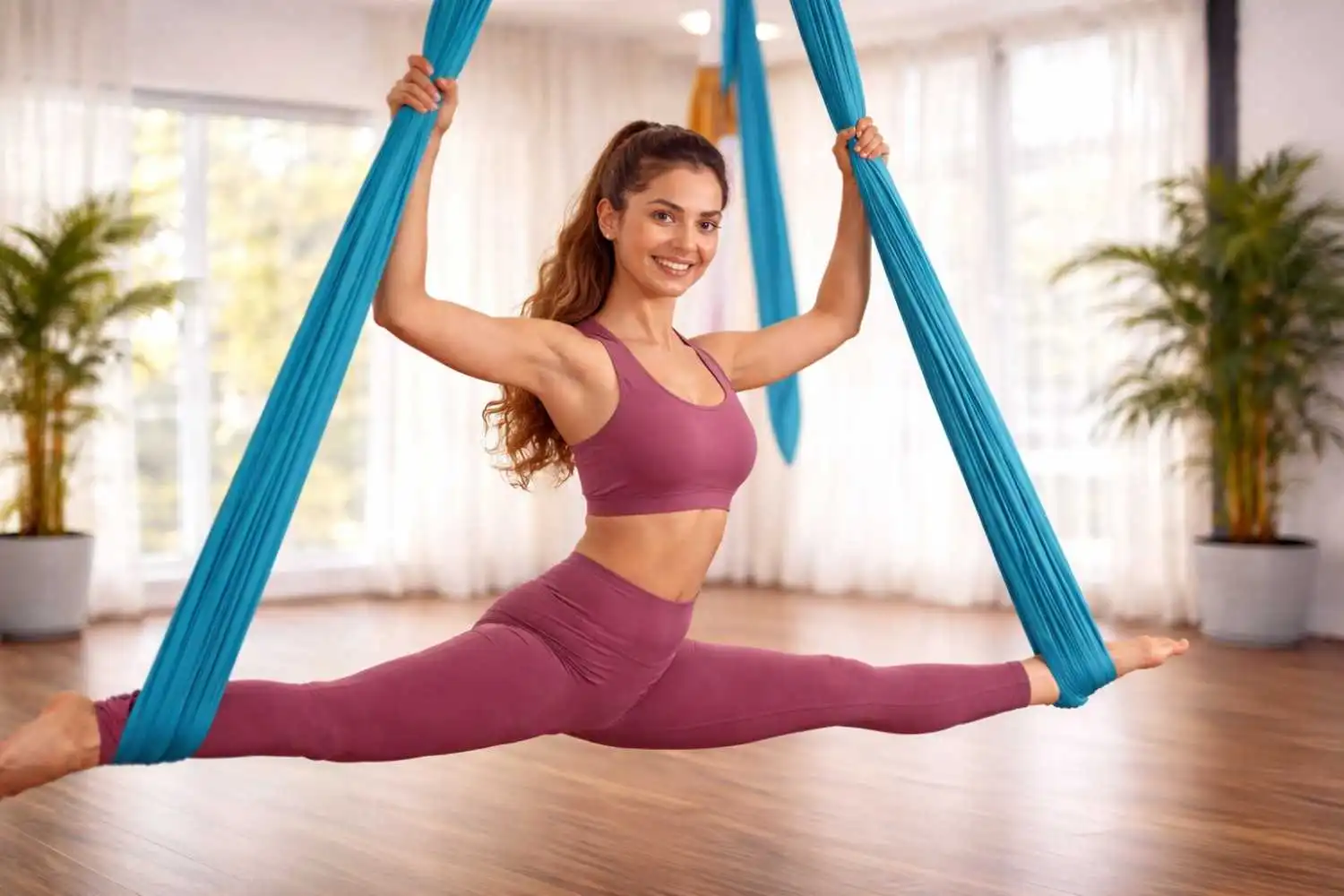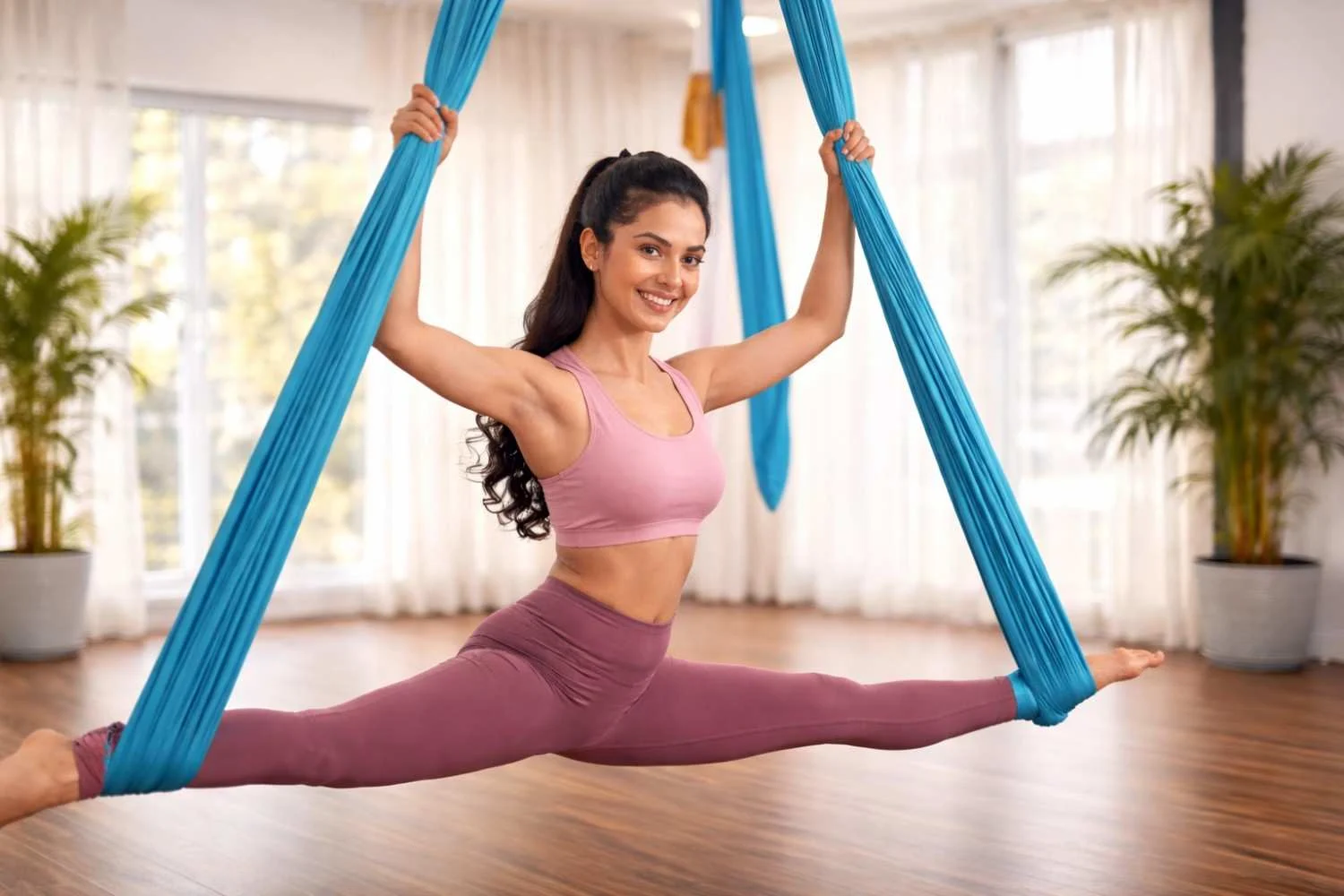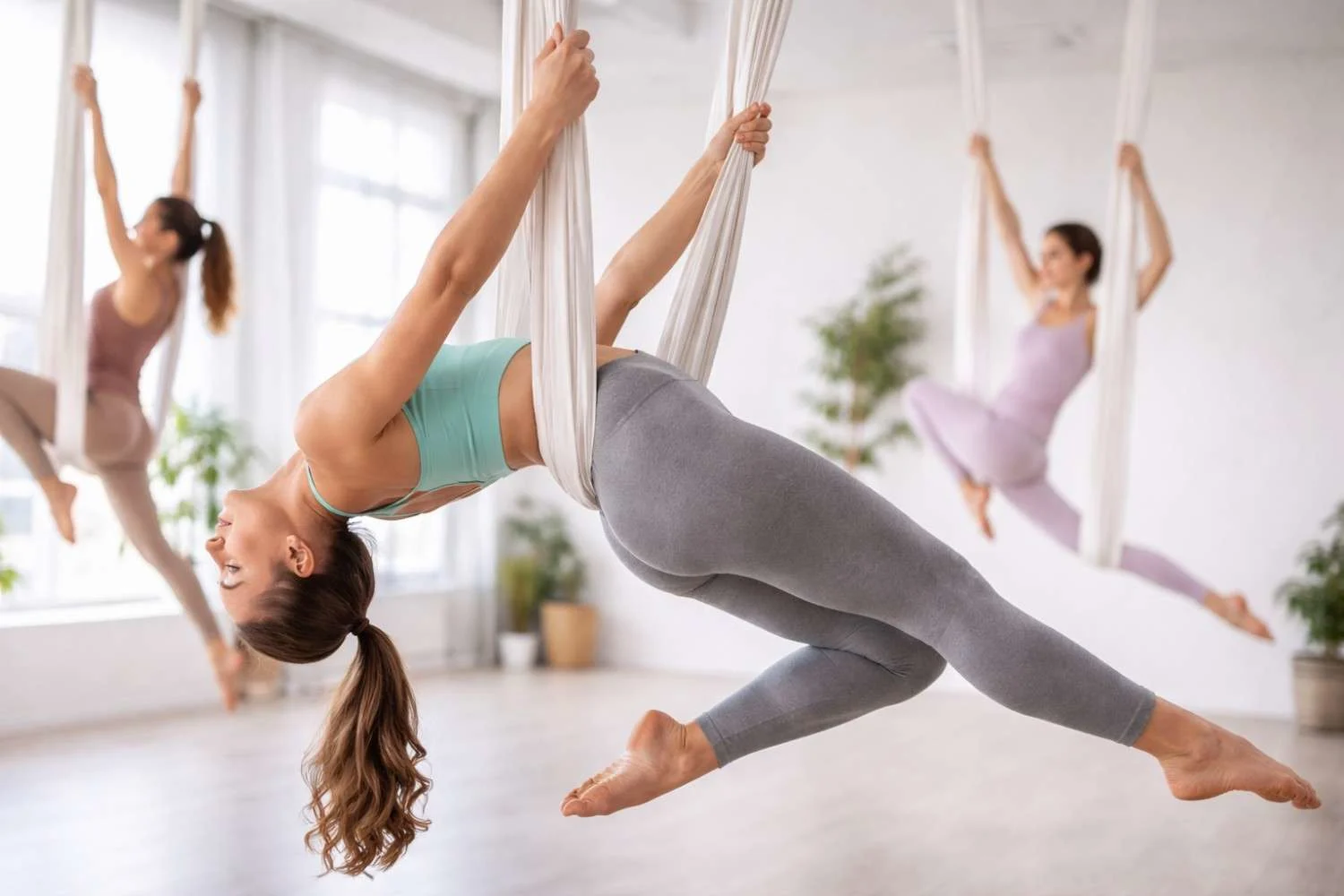
Aerial yoga is a contemporary fusion of traditional yoga, Pilates, and aerial acrobatics, performed on a silk hammock suspended from the ceiling. This truly unique practice enhances flexibility while also strengthening muscles and promoting mindfulness, giving the practitioner a chance to experience weightlessness.
In this blog, we are going to explore what aerial yoga is, its benefits, techniques, safety precautions, and how to get started.
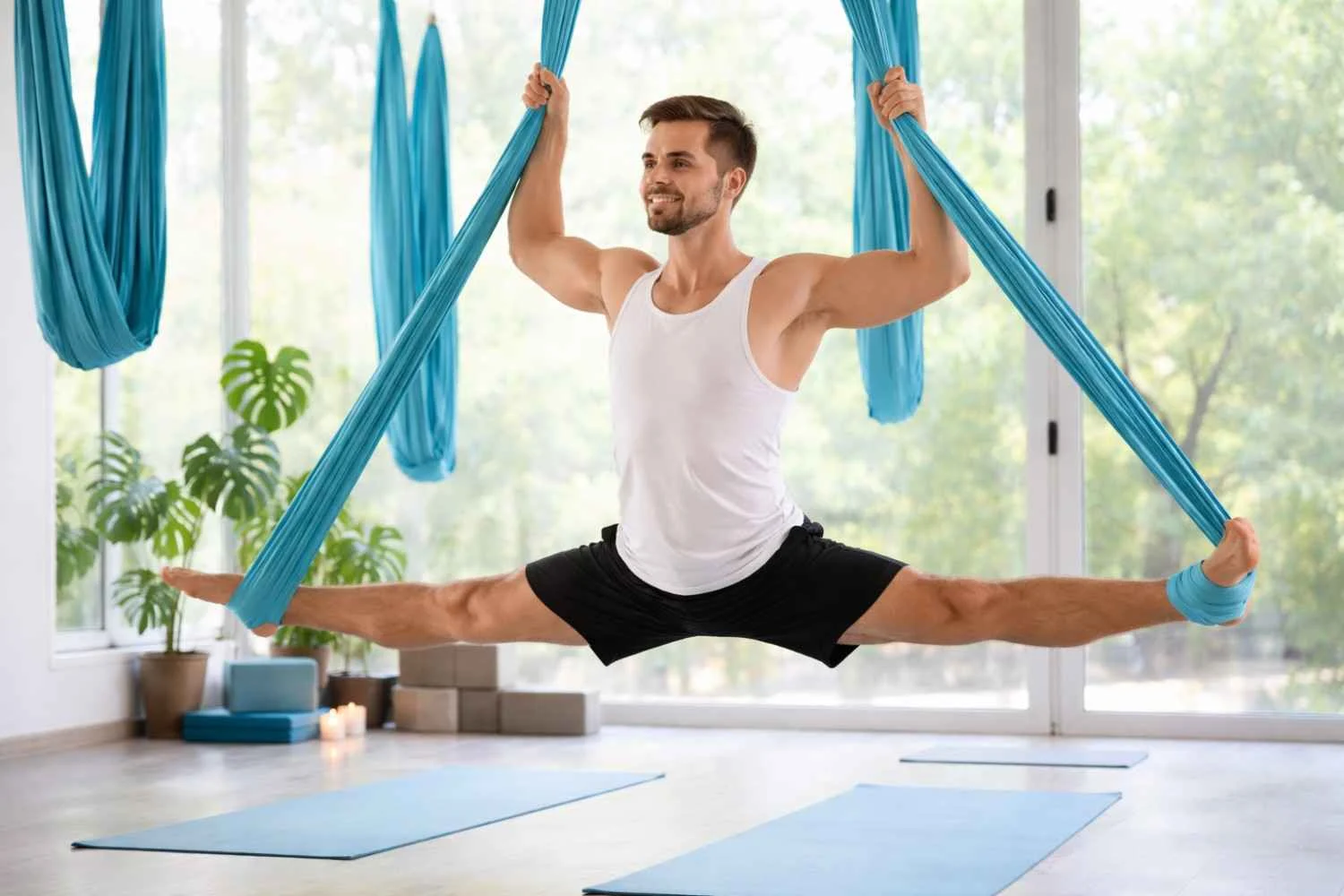
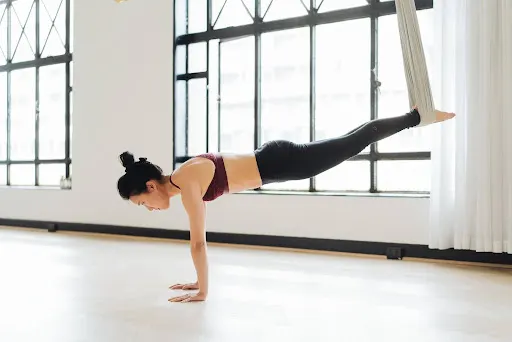
Aerial yoga is a type that uses a silk hammock to support the body while performing poses. It is a dynamic and therapeutic workout that fuses traditional yoga postures with aerial movement. Aerial yoga in a full aerial hammock/silk can be considered safe enough since it's tightly attached and rigged, and carabiners are plastically secured. The hammock method is the most secure mode of attachment to the ceiling or a very solid overhead structure.
Safety gear includes yoga mats, pads, and excellent rigging, which is there not just to prevent injury but also to provide comfort during classes.
To understand the concept in detail, read our guide on what is aerial yoga..
In aerial yoga, the hammock acts as a supportive prop that holds part or all of the body weight. This allows practitioners to move more freely and safely into stretches and inversions. By using gravity, aerial yoga helps improve balance, mobility, and flexibility while reducing pressure on joints.
Learn more about the technique in our article on how aerial yoga works.
Aerial yoga offers a variety of physical and mental benefits:
Explore the full list of advantages in our post about the benefits of aerial yoga.
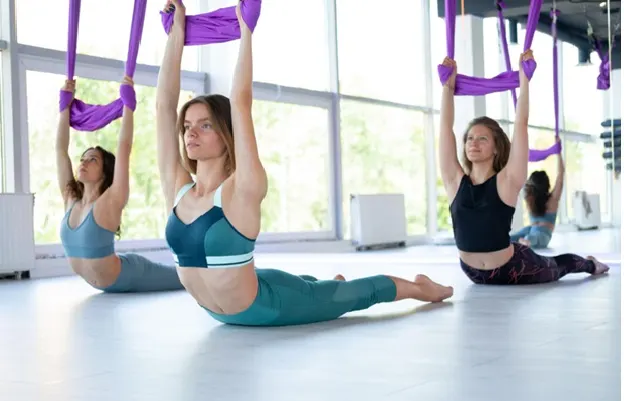
Aerial yoga is beginner-friendly when practised under proper guidance. In the first session, participants usually learn basic poses, safety techniques, and how to use the hammock correctly. A certified instructor helps ensure proper alignment and confidence during the practice.
If you are new to this practice, check our detailed guide on aerial yoga for beginners.
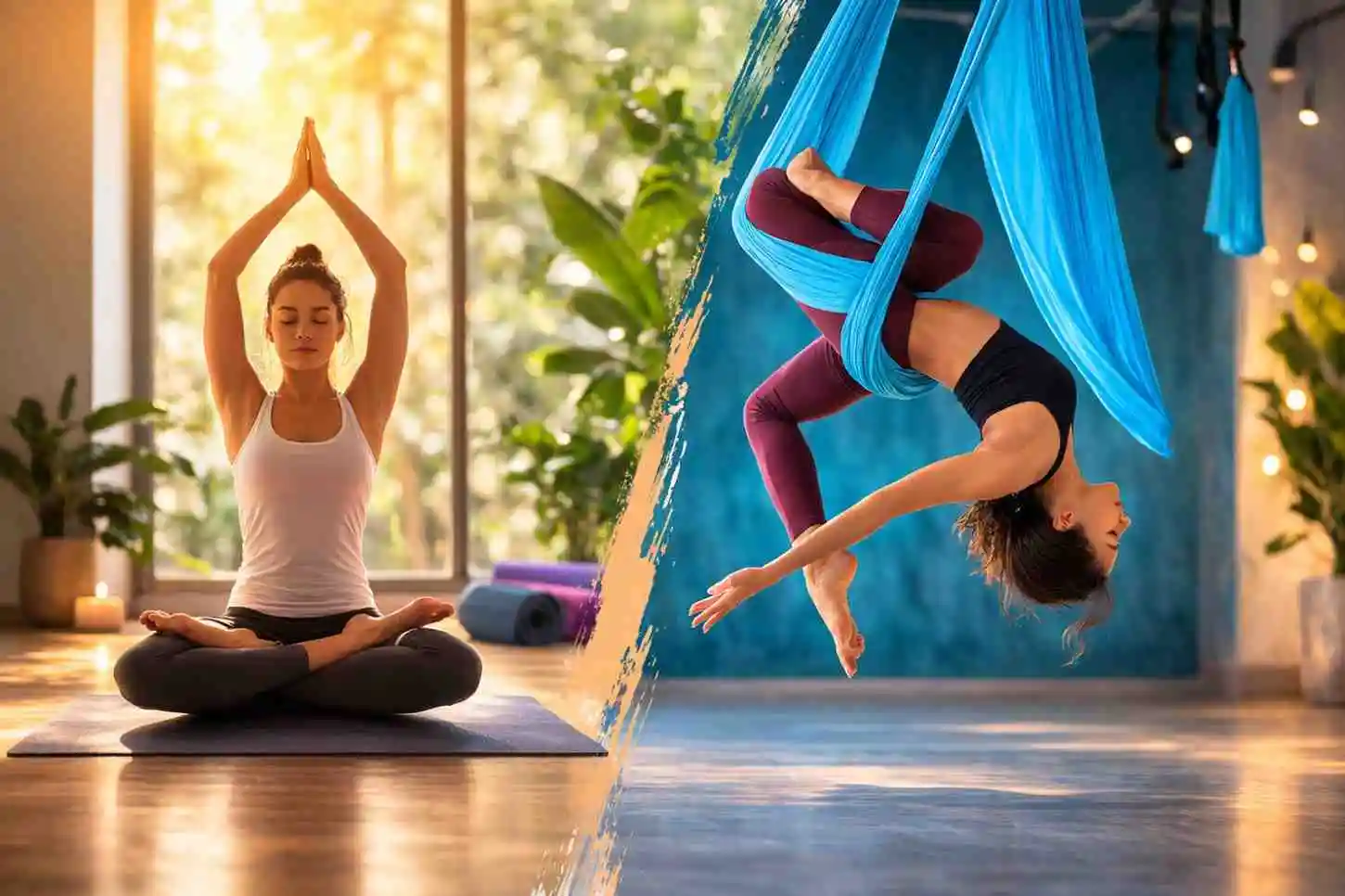
Aerial yoga differs from traditional yoga mainly in terms of equipment and movement style. Traditional yoga practitioners practice on a mat, whereas aerial yoga utilises a suspended hammock for support. These features can reduce pressure on joints and allow deeper stretches. Some poses may feel easier due to support, while others require more balance and coordination.
See the full comparison in our article on aerial yoga vs traditional yoga.
Aerial yoga is generally safe when performed under the supervision of trained instructors. Proper installation of equipment, correct posture, and following safety guidelines are essential for a secure practice environment.
Read our safety guide on Is Aerial Yoga Safe.
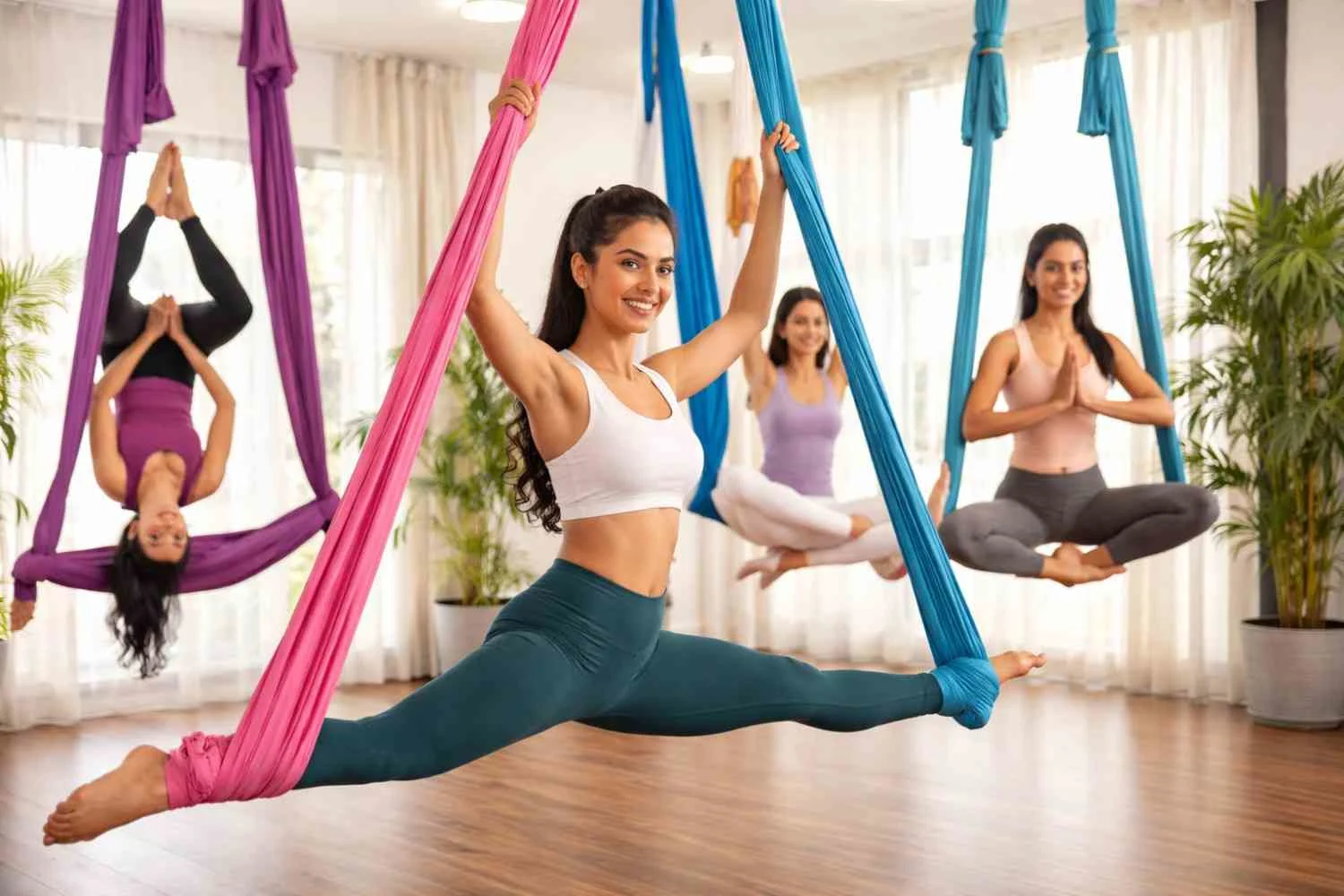
Omansh designs its aerial yoga classes with structured sessions that cater to a variety of experience levels. Participants can choose between group classes or private sessions, depending on their comfort and goals. The learning environment focuses on safety, alignment, and gradual progress.
Explore available aerial yoga classes
Aerial yoga teacher training provides in-depth knowledge of poses, safety techniques, anatomy, and teaching methods. This programme is ideal for those who want to become certified instructors or deepen their understanding of aerial yoga practice.
Learn more about aerial yoga teacher training
Copyright 2026 | Omansh.org
Website designed and developed by PulsePlay Digital